bringing design into the classroom
How might we inspire local high students through human-centered design and social entrepreneurship education?
Project Title: “See Something, Do Something” Curriculum Design & HCD Education
Company: Innovate Health Yale Duration: Jan 2019 - May 2019 (5 months)
Key Project Activities: My Role: Curriculum Designer & Educator
Curriculum redesign Collaborators: Innovate Health Yale staff, Metropolitan Business Academy students & faculty
HCD & social entrepreneurship education
Design & execute a final pitch day
Context & Challenge
Metropolitan Business Academy (MBA) is an interdistrict magnet high school located in New Haven, CT that employs project-based learning and business education to prepare students for college and beyond. The school’s population is extremely diverse and many students take buses from great distances to attend the school - often, from New Haven’s severely underserved neighborhoods such as Newhallville and Dixwell. MBA continuously seeks to positively engage students and began conversations with Innovate Health Yale (IHY) - a department based at Yale University that aims to foster innovation in public health and education - to introduce a social entrepreneurship program. IHY had developed and executed similar programs at other local high shcools, and I was brought in as an Education Fellow to adapt and refine this semester-long class curriculum to a 7-week afterschool program, execute the program by working with MBA faculty and teach weekly sessions at the school, and hold a final pitch day with the MBA community.
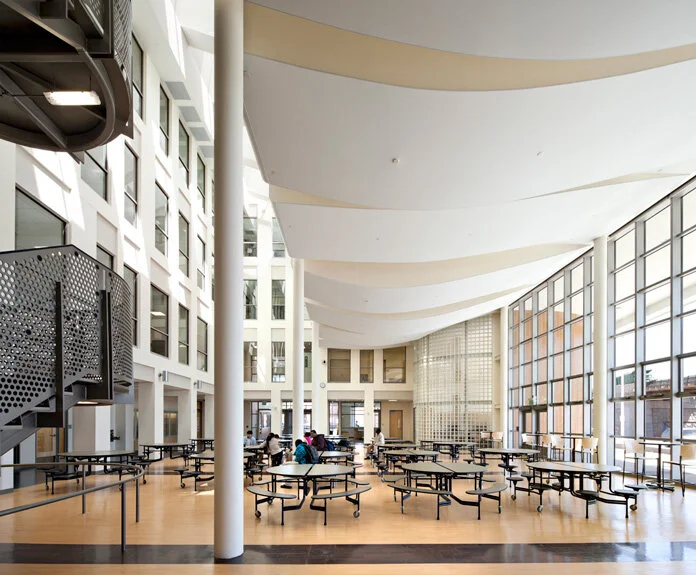
Image courtesy of Metropolitan Business Academy

Process
Curriculum Redesign
Innovate Health Yale developed “See Something, Do Something,” an experiential curriculum to empower New Haven high school students. The curriculum teaches the ideas, skills, and processes of human-centered design and social entrepreneurship so that students can be change agents and leaders in their communities. I collaborated with the IHY education team and the MBA faculty and staff to understand how this curriculum could be adapted for the needs of the MBA students and make it managable for an afterschool program.
The curriculum employed culturally relevant examples and case studies of local social entrepreneurship efforts in New Haven neighborhoods. The curriculum aimed to help students develop in the following areas:
Team-building
Self-reflection
Creative thinking
Understanding the design thinking process
Measuring impact with metrics
Understanding revenue and costs associated with starting a venture
Pitching skills
The program presents social entrepreneurship as tool for creating positive social change, but also as an opportunity to demonstrate to students the power they have to create an impact within their community, and to shape it to match their own ideals.
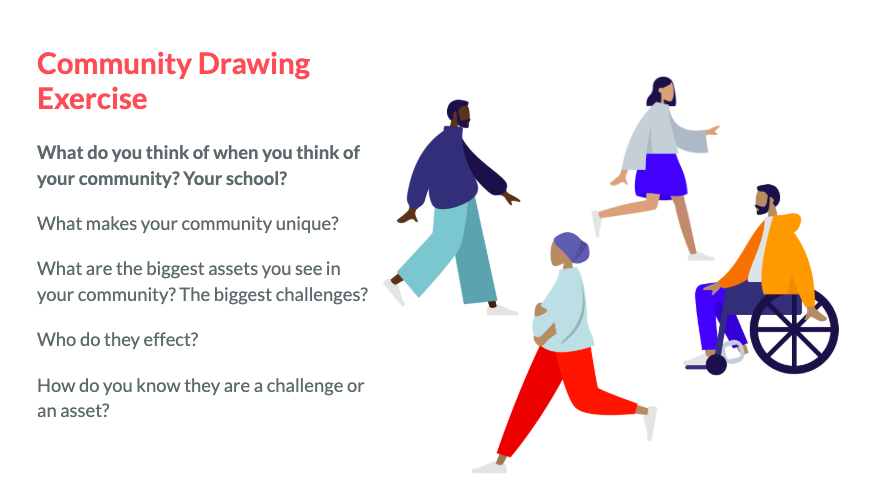
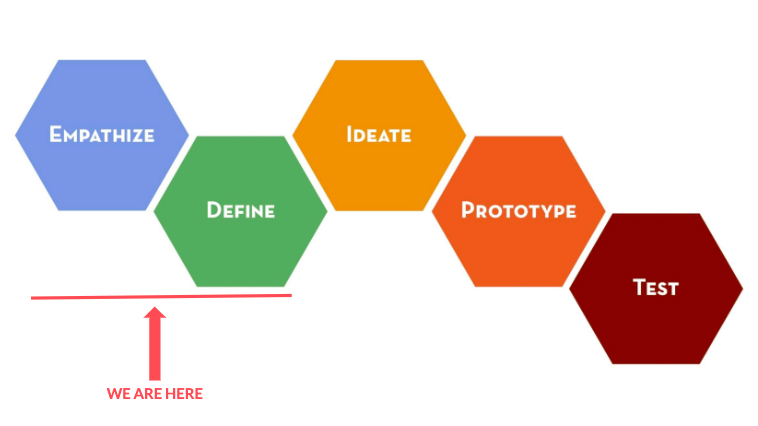
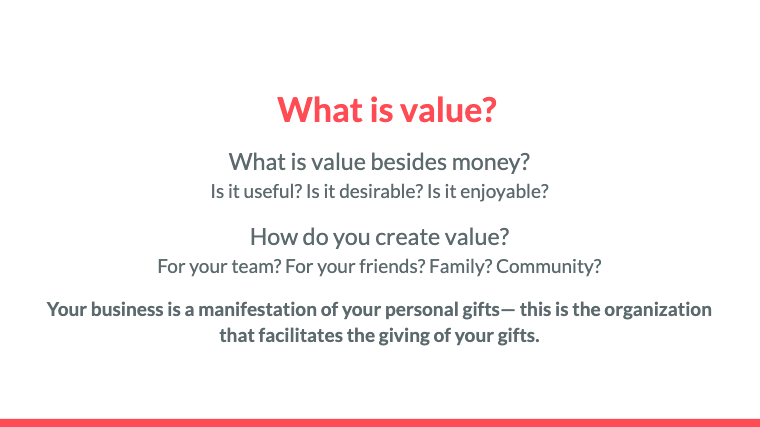
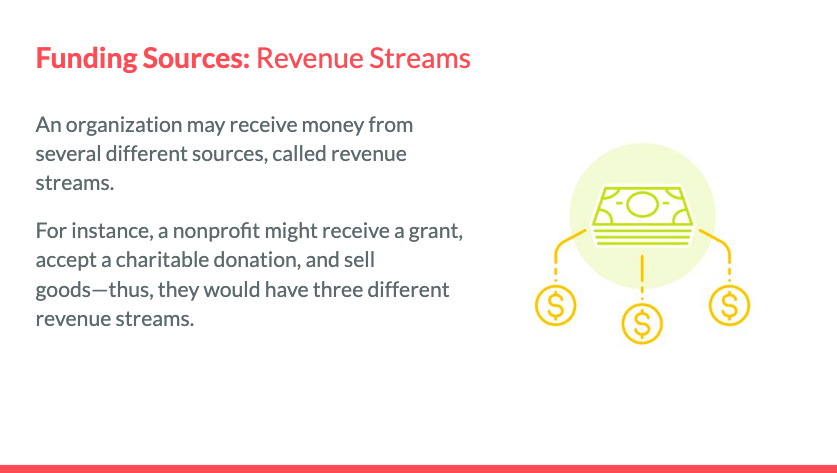
Teaching slides that I designed for the program
Teaching the Program
Once the curriculum was developed, I executed the program by teaching weekly afterschool sessions at MBA. The students were given a pre-course survey that aimed to asses their familiarity with the human-centered design process and social entrepreneurship, personal assessment of skills like creativity and time-management, and their perceptions of themselves as important parts of their community. A post-course survey was also given, and the data was analyzed to determine areas of improvement.
The students splits up into teams and were asked to choose a problem that they observed at their school. The scope was kept at the school-level to simplify the research piece and so that students could deeply engage in the empathy-building phase of the program by interviewing their classmates and teachers. The program was broken down into the following weekly sessions, and a social business model canvas was used to guide them week-by week:
Introduction to Social Entrepreneurship & Team-Building
Empathy & Defining
Ideation
Prototyping
Testing
Business Models & Pitching
Final Pitch Presentations
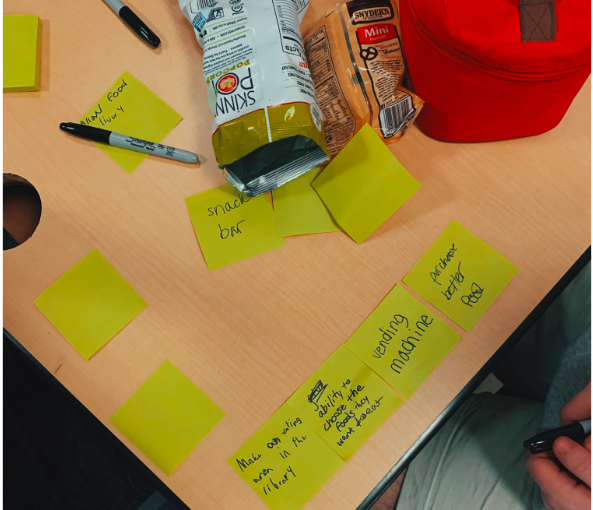
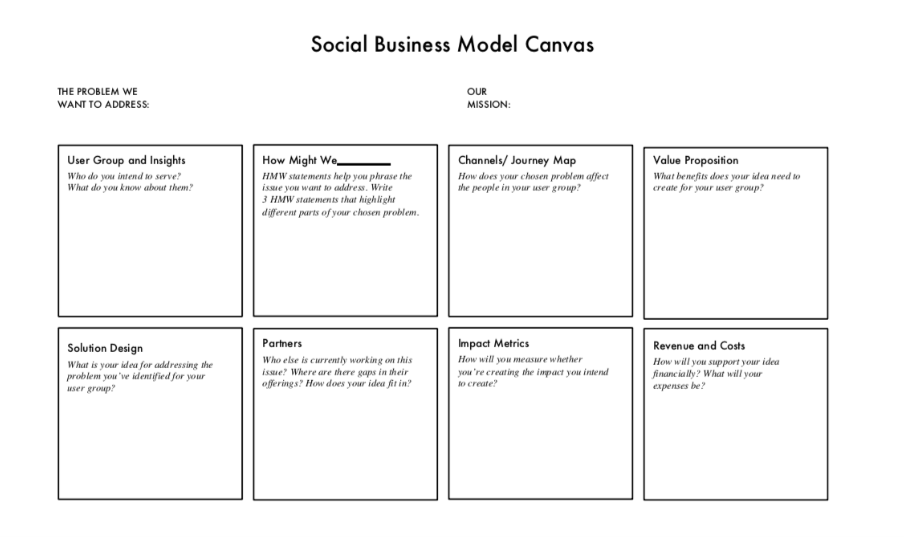
Image courtesy of Innovate Health Yale
Pitch Day
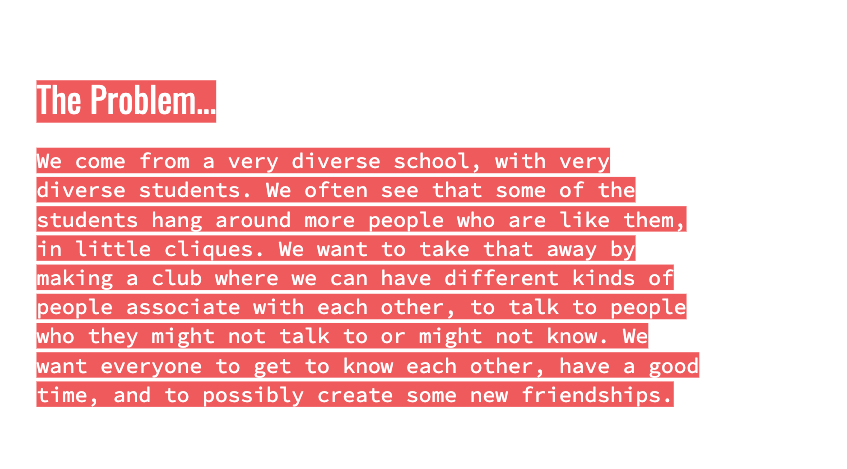
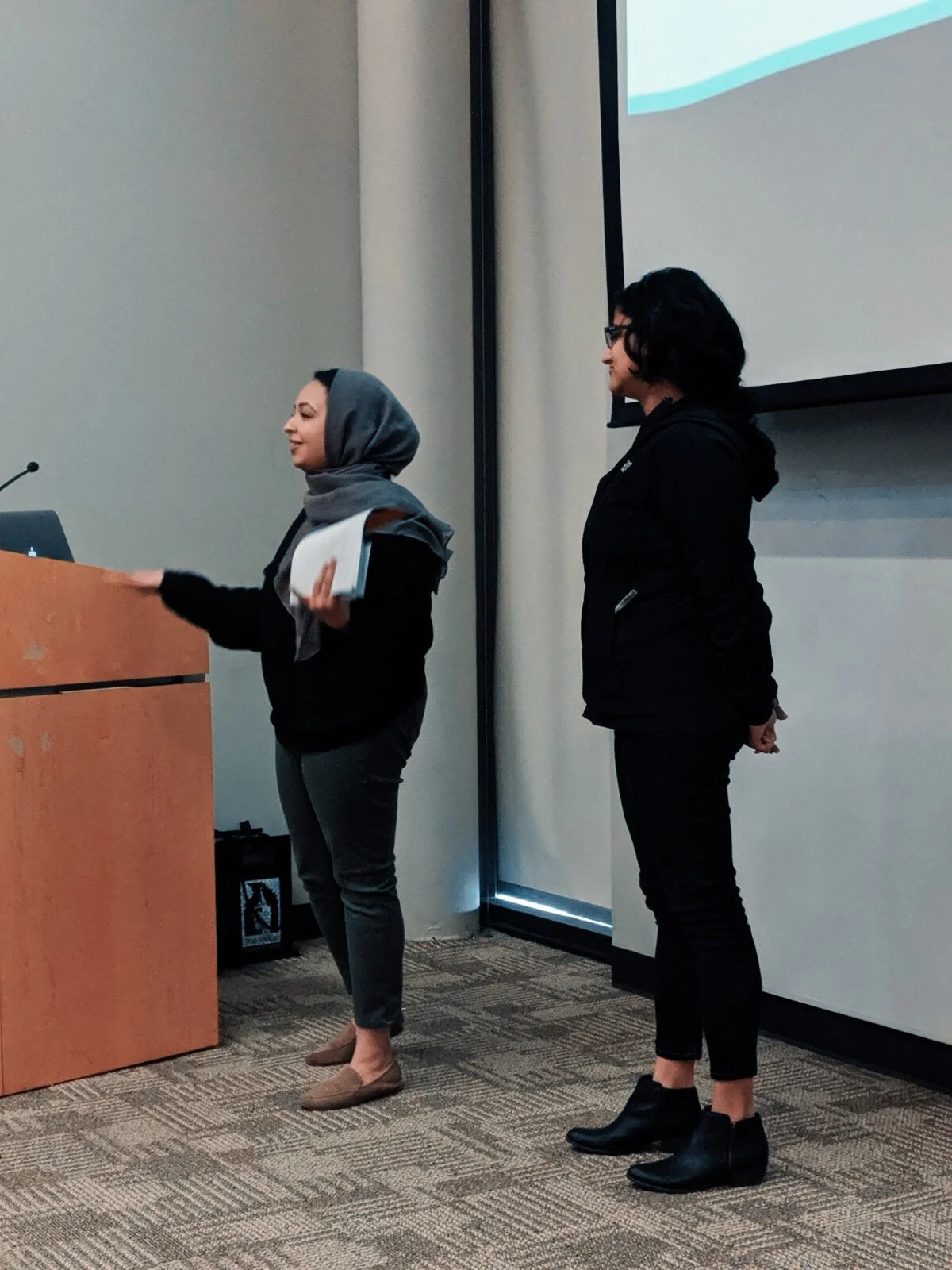
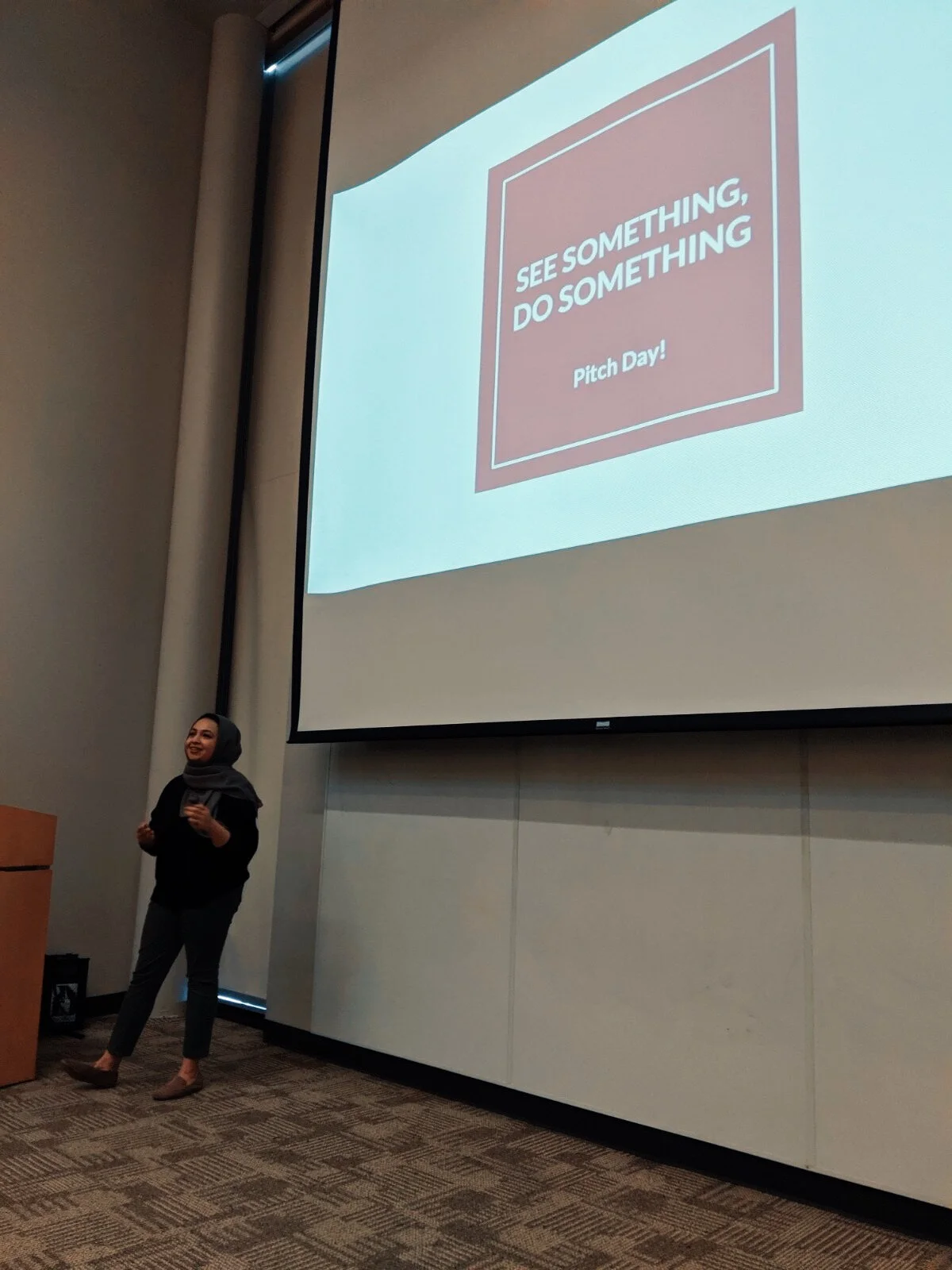
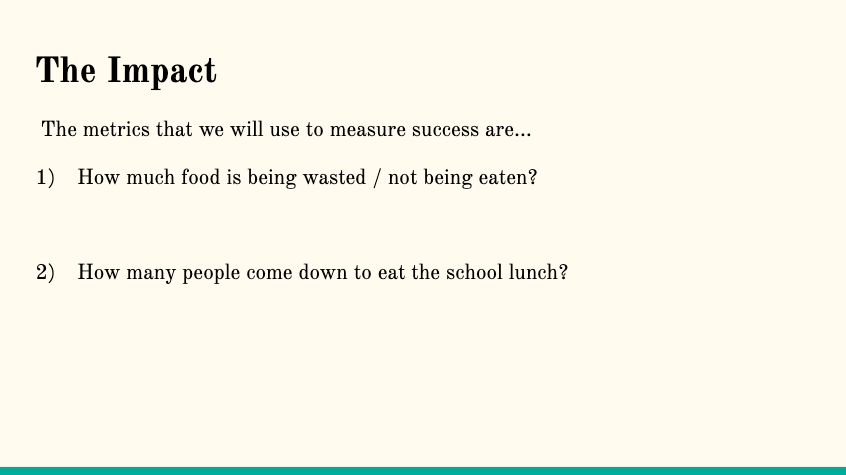
The program culminated in a final pitch day where students presented their projects to their school - the audience included their classmates, MBA teachers and staff, and IHY staff. The student projects presented solutions to issues such creating inclusivity and breaking down cliques at their school, creating a centralized way for students to receive career opportunities from faculty, and understanding school lunch consumption and food waste. The pitch day was a success and left both MBA students and faculty inspired!


Outcomes & Impact
The “See Something, Do Something” program was executed successfully at Metropolitan Business Academy and created a precedent for other such programs in the future. The post-course survey data were analyzed and compared to the pre-course survey and showed various improvements. The MBA students showed significant increases in knowing what resources are available to help them with a project in their school or community, believing they have enough influence on impacting community decisions, knowing other people who care about the same social issues they do, and feeling that it is their responsibility to be actively involved in community issues. The students did not believe it was acceptable to ignore issues in their school or community, nor did they believe that the problems in their communities were too big or deep-rooted to ever be solved. There was observed improvement in all personal skills assessments with especially significant improvements in creativity and time-management skills. Additionally, there was almost universal improvement in students’ understanding of design thinking and social entrepreneurship with the most positive increases regarding knowing what impact evaluation is and knowing about different methods to survey potential customers.
The curriculum was adapted by a professional curriculum writer hired by IHY and is now available open-source on the IHY website, free to use for middle school and high school teachers across the country. Check it out here!